
Your guests will forget the passed appetizers. They will not forget the moment they poured their own candle.
We have a theory about why people remember certain events for years and struggle to recall others by the following Monday. The venue matters, the flowers matter, and the food definitely matters, though we have seen some spectacular food. It is about whether guests were participants or spectators. Whether something happened to them, or whether they made something happen themselves.
As it turns out, this is not just a theory. There is a substantial body of research on exactly this, and the findings are good news for anyone who has ever booked a make-and-take station and watched the room come alive around it.
The Enactment Effect: Why Doing Beats Watching Every Time
In memory research, the enactment effect refers to the well-documented phenomenon that physically performing an action produces stronger, more durable memories than observing or hearing about the same action. Studies going back to the 1980s have consistently shown that people remember what they did far better than what they watched someone else do.
The reason involves how the brain encodes experience. When we perform a physical action, we engage motor systems, sensory processing, and emotional response simultaneously. That multi-channel encoding creates what researchers call a richer memory trace, one that is easier to access later and more resistant to fading over time.
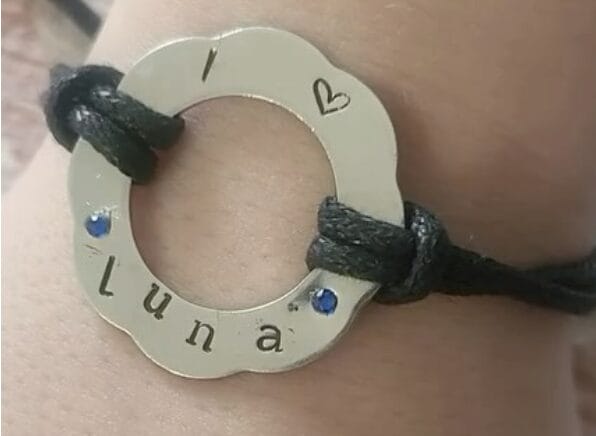
For event planners and hosts, this has a direct and practical implication: an event where guests make something is an event guests remember. A candle-making party, a spa bar where guests blend their own body scrub or lotion, a metal stamping station where they press their own name into a piece of metal: these are not just fun activities. They are memory-making machines, and the science says so.
Why Scent Is the Secret Weapon in the Room
Of all five senses, smell has a uniquely powerful relationship with memory, and the reason is anatomical. While visual, auditory, and tactile signals travel through the thalamus before reaching the rest of the brain, olfactory signals travel directly to the hippocampus and amygdala, the structures most responsible for forming and storing long-term emotional memories. This is why a particular scent can transport you to a specific moment from twenty years ago with a clarity that a photograph cannot match.
For events, this means that any station involving fragrance is doing double duty. It is creating a physical, hands-on experience through the enactment effect and layering a scent memory on top of it at the same time. That is a combination that is very difficult for any other type of entertainment to replicate.
Our candle-making station is the clearest example of this. A guest who spends fifteen minutes choosing her fragrance, pouring warm wax into her jar, watching it set, and labeling it with her name has engaged her hands, her nose, her focus, and her sense of accomplishment all at once. Three weeks later, when she lights that candle at home, every one of those channels fires again. She is back at your party. Your event just happened twice.
The Spa Bar: Where the Science Gets Especially Fun
Our spa product stations, which include body scrubs, bath soaks, lotion making, lip balm bars, body sprays, and room diffusers, are among the most popular stations we run at bridal showers, bachelorette parties, milestone birthday celebrations, and corporate events. They work across a wide range of crowds, and they land consistently well, and the enactment effect explains a significant part of why.
At a spa bar, guests are making decisions: which base, which scent, which color, which combination of ingredients. They are mixing, stirring, and assembling. They are smelling options and choosing the one that feels like them. By the time they cap their jar and peel the backing off their custom label, they have been physically and sensorially engaged for anywhere from ten to thirty minutes, which is a remarkable amount of sustained attention at any event.
The lip balm bar deserves a special mention here because it surprises people every time. Guests walk up expecting a simple activity and discover that choosing between a dozen cosmetic-safe flavors and blending them into their own formula is completely absorbing. We have seen guests spend twenty minutes at the lip balm bar at events where they told us beforehand they probably would not do any of the stations. The hands-on pull is real, and it is hard to resist once you are standing at the table.
Touch Without Scent: Metal Stamping and Leather Stamping
Our metal stamping and leather stamping stations get to the same memory-making outcome through touch alone, and they do it in a way that appeals to a slightly different guest. The person who finds the spa bar a little too personal, or who is not sure about scented products, will often be completely absorbed at the stamping table.
There is something specifically satisfying about stamping. The physical resistance of pressing a letter stamp into metal, the sound it makes, the mark that appears exactly where you placed it: these are tactile experiences with immediate, visible results. The brain loves immediate feedback, and stamping provides it with every strike.
Guests who stamp their own name, a date, or a short phrase onto a metal keychain or a leather luggage tag leave with an object that is one of a kind because they made it with their own hands. That distinction matters more than it might seem. A favor that was handed to someone is easy to leave on the table. A favor that someone made for themselves rarely gets left anywhere.
The Take-Home Tail: Your Event Keeps Happening After It Ends
One of the most underappreciated aspects of hands-on event stations is what happens after the event. Traditional entertainment, however wonderful, ends when the event ends. Traditional entertainment, however wonderful, ends when the event ends. The performer packs up, the photo booth gets rolled away, and the DJ loads out.
A candle made at your event goes home and gets lit on a Tuesday night three weeks later. A body scrub gets used in the shower on a random Wednesday morning. A stamped leather keychain goes on a set of car keys and gets seen every single day. Every time that object is used, the memory of making it at your event is reactivated. The experience does not just live in memory. It lives in the guest’s daily life.
For corporate event planners, this is the ROI of Delight made tangible. Brand recall, employee goodwill, and the warm association guests carry between your company and a memorable afternoon are all extended well past the event itself every time that candle gets lit or that keychain gets used. That is not something you can get from a branded tote bag.
What This Means for Your Event
Every event we design at Laine Too starts from a simple premise: guests who make something remember the event. Guests who watch something enjoy the event. Both have their place, and we offer both, but when a client asks us what creates the most lasting impression, the answer is always the station where someone walked up, rolled up their sleeves, and made something with their own hands.
Whether that is a candle-making party at a bridal shower, a spa bar at a corporate appreciation event, a lip balm station at a sweet sixteen, or a metal stamping table at a mitzvah, the underlying experience is the same: a guest made something, she took it home, and your event traveled with it.
We are Guest Participation Experts, and we have been designing these experiences for events across the Chicago area since 2013. If you are planning an event and want your guests to leave with something they will actually remember, we would love to help you build it!