
From battlefield corps badges to merit badge sashes to the patch bar at your event, the format has barely changed in a hundred and fifty years.
In 1863, a Union general named Joseph Hooker had a problem that sounds small and was costing lives. Officers and surgeons on a battlefield could not tell at a distance which unit a man belonged to, which made it very difficult to move people where they were needed. His solution was a system of cloth shapes worn on the cap. Stars, crescents, diamonds, and trefoils marked the corps, and the color of the shape marked the division within it. Historians generally treat those corps badges as the direct ancestor of every unit patch that came after.
Something worth noticing happened almost immediately. Men began taking pride in the shape they had been assigned, which nobody had planned for and nobody could have stopped.
The Creek That Started It
The First World War made the American army enormous in a very short span of time, and an enormous army has a logistical problem the corps badges had only partly solved. The 81st Infantry Division trained at Camp Jackson in South Carolina, alongside a creek called Wildcat. They started calling themselves the Wildcats, and they sewed a wildcat onto their sleeves without anyone authorizing it.
Other divisions objected to the 81st wearing something the rest of them did not have, and the argument climbed the chain of command until it reached General Pershing. He could have ordered the wildcat removed. Instead he approved it and told every division in the American Expeditionary Forces to design one of their own. That single decision created the entire modern military patch tradition, and it started with soldiers naming themselves after a creek.
From Flight Jackets to Cut Sleeves
During the Second World War, airmen in the Army Air Corps began sewing patches onto their regulation flight jackets. The practice did not end when the war did. Those men came home, bought cheap surplus motorcycles, and formed clubs with each other, and they kept sewing patches onto their jackets. The sleeves came off because they restricted movement while riding.
The 1947 gathering at Hollister, California, and the press coverage that followed, drew a public line between casual riders and the clubs who leaned into a harder image. The clubs answered by making their patches more elaborate rather than less. A back patch became a structured document. The club name and insignia sat in the center, rank went on the front, and new members earned pieces of the design over time rather than receiving the whole thing at once.
In the seventies and eighties, punks and metalheads took the same garment and filled it with band patches instead of club colors. The jacket still meant what it had always meant, and only the vocabulary changed.
The Sash Running Alongside All of This
A quieter tradition was developing at the same time. Robert Baden-Powell held a camp on Brownsea Island in August 1907 with twenty boys, and published Scouting for Boys the following year. It described proficiency badges for handicrafts and hobbies that might help a boy make his way in life.
American Scouting issued a list of fourteen badges in 1910 without producing them, and manufactured the first fifty-seven in 1911. The count climbed as high as a hundred and twenty-seven by the mid-seventies. Several generations of children have now worn a sash that works as a public record of everything they learned how to do, which is a strange and lovely object once you stop to consider it.
What All of Them Have in Common
A soldier, a club member, a teenager at a show, and an eleven-year-old at a scout meeting are doing the same thing. Each one selects from a set of established symbols, keeps the ones that are true about them, and wears the result somewhere other people can see it.
Almost nobody in that history was inventing new imagery. They were choosing what applied to them, and the choosing is what the whole thing runs on.
How a Patch Bar for Events Works
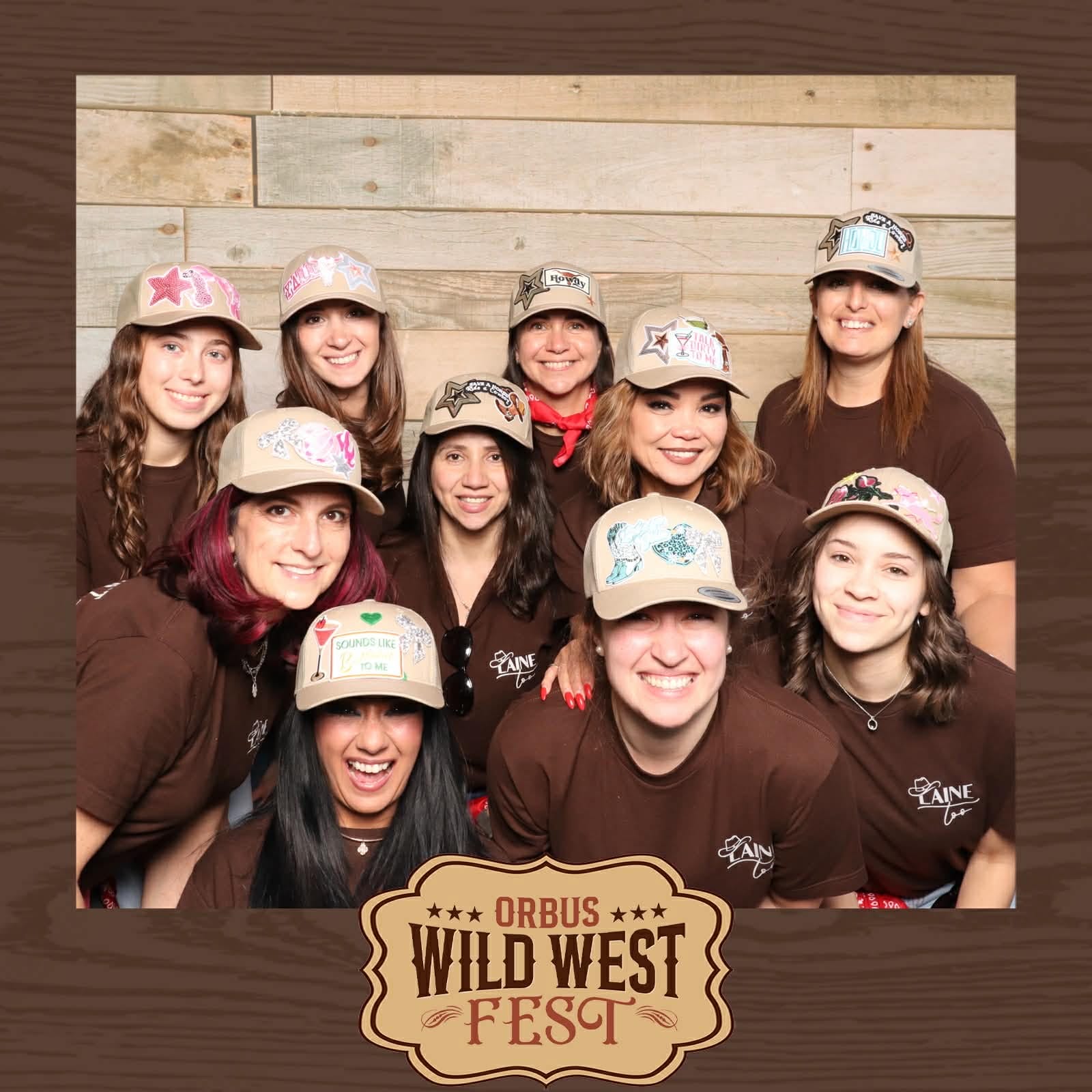
Our patch bar runs on exactly that grammar. Guests choose from initials, hometowns and locations, sports, and themed designs, and we heat-set them onto a hat, a jacket, a tote, or whatever they brought with them. The categories answer who somebody is, where they come from, and what they care about, which is the same set of questions a division insignia and a merit badge sash were answering.
The appeal at an event is that guests get to assemble something small and specific about themselves in about the time it takes to have a conversation. It is an iron-on patch station in mechanical terms and something considerably older than that in spirit, and people who walk up expecting a craft table tend to stay longer than they intended.
A Custom Patch Activity at a Corporate Event
There is a useful lesson in this history for anyone briefing a branded activation. Your logo was never going to be the reason a guest stops at the table. Their own initials are the reason. Your mark travels alongside them because they chose to put it there, and a logo a guest selected outperforms a logo that arrived on its own every single time.
The same logic holds at a mitzvah, where thirteen-year-olds will patch a hat with their initials and a sport and wear it to school on Monday. It holds at a DIY patch bar party or a milestone birthday, where the location patches tend to start conversations between guests who did not know they grew up twenty minutes apart.
Planning Notes
Tell guests in advance if you want them bringing their own item. A patch on a jacket someone already loves outperforms a patch on something we supplied, and people need a day of notice to think about what to bring.
Place the station where the heat press is visible. Watching a patch get set is a small piece of theater, and it pulls people over far more reliably than a sign does.
Talk to us about your guest count early. Selection takes most of the time at this station, so the number of artists and the size of the patch assortment both scale with the room.
Looking for a Patch Bar in Chicago?
We are Laine Too, Chicago’s Guest Participation Experts, and we have been running hands-on stations here since 2013. Every event starts with a pre-event consult where we work through your guest list, your theme, and which patch assortment suits the room you actually have. If you want your guests wearing something out the door, reach out. We would love to help you build it!